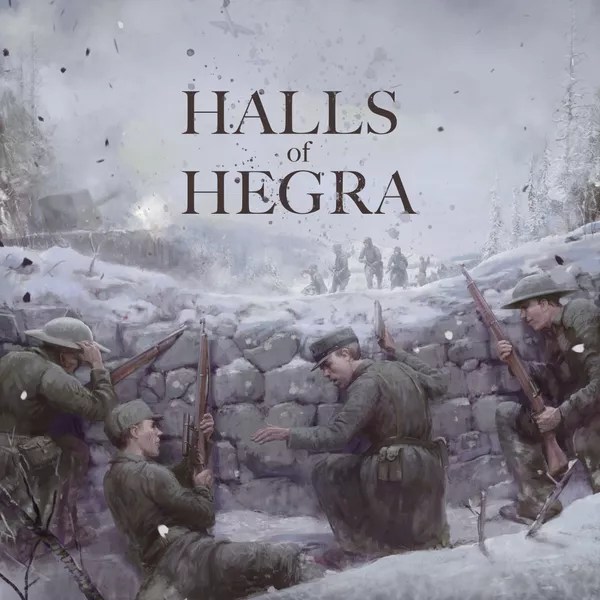
Image taken from https://boardgamegeek.com/image/6158972/halls-of-hegra
Designer: Petter Schanke Olsen
Publisher: Tompet Games
Artists: Jog Brogzin, Joeri Lefevre
Looking at our collection, we don’t have many true, historical, war themed games besides Twilight Struggle, which is more of a political game than war game anyway. So, needless to say, this one was a little outside our comfort zone, but that’s honestly part of the reason we wanted it. Thematic diversity in a game collection is important (at least to us), and the solo-ability of this game made it significantly more desirable. Regardless, this game is as solid as other reviewers have claimed. Thematically it’s a gem, mechanically it’s interesting, and the balance between strategic and tactical decisions is perfect for this style of game.
Honestly, there is a lot going on in the game, so I’m not going to get too deep into the nitty gritty, but the goal is to survive a siege against the Germans during World War Two as Norwegian volunteers. Resource management, action selection, and bag building are the three largest mechanics utilized, but the game also identifies worker placement (what I view as action selection here) and tower defense/area control.
Despite the fact there is a lot to keep up with, the round layout/guide on the back of the rulebook is literally perfection. It is the only way I have been able to remotely facilitate each round of every game without (hopefully) forgetting something important. Besides that, the rule book as a whole is pretty good. There are a few order elements I might change, and maybe bold more headings or something, but it introduces the game well and provides a solid guide for the first game.
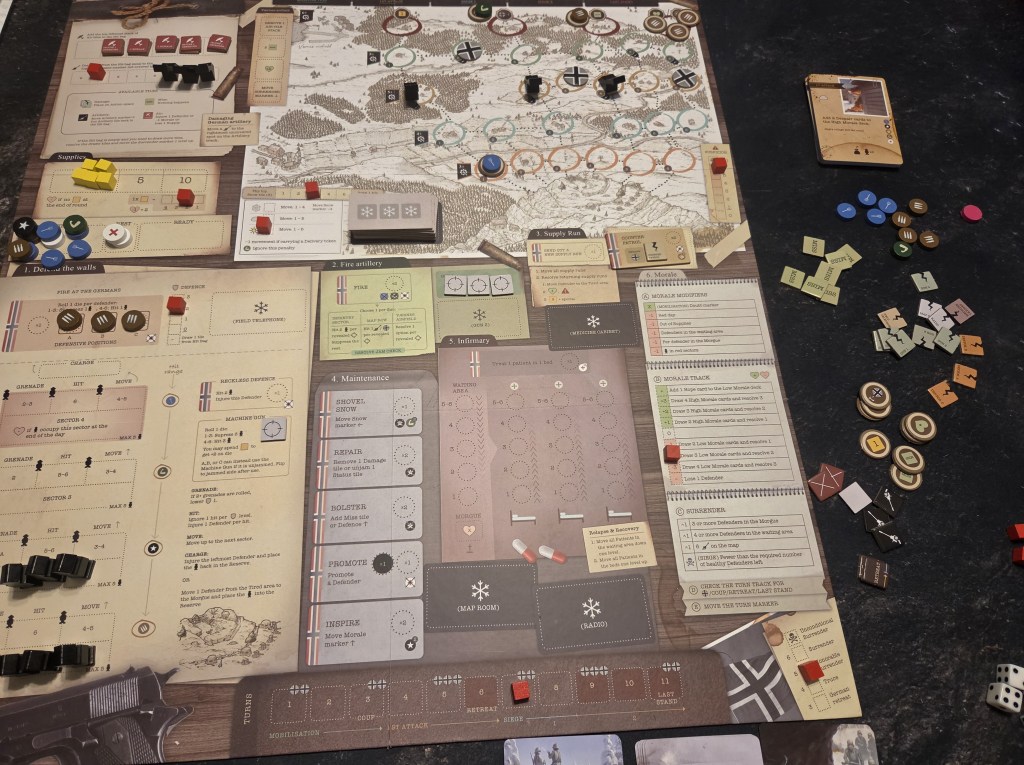
A few more trivial aspects I enjoy: the setup and take down are easy and succinct for the complexity, the game boards aren’t too large, and they use overlays to keep it as such, the box size is very reasonable, the artwork is incredible, and the components are solid. The game can run long but most solo games were an hour to an hour and a half, and our two player game was a little over two hours. It doesn’t feel like the game overstays its welcome; you are so engrossed in the action and gameplay that the time flies by (unless you’re losing terribly…).
One of my favorite parts of the experience is the design choice(s) when it comes to the bag building. At the start of the game, the player(s) only have a certain number of rounds to do the actual bag building (which is how you gain people for your actions) and then the rest of the game is seeing how those early decisions play out, always hoping for the best possible outcome and doing what you can in the later rounds to build on what you started. It’s a really neat puzzle that provides lasting effects while still being manageable and relevant to the earlier rounds.
This game is obviously heavy thematically but also pretty heavy mechanically. Thankfully, the rulebook has that awesome flow chart, and the game boards also provide almost all necessary information for each step which is massively helpful. The boards are very well organized and utilize space very efficiently and effectively.
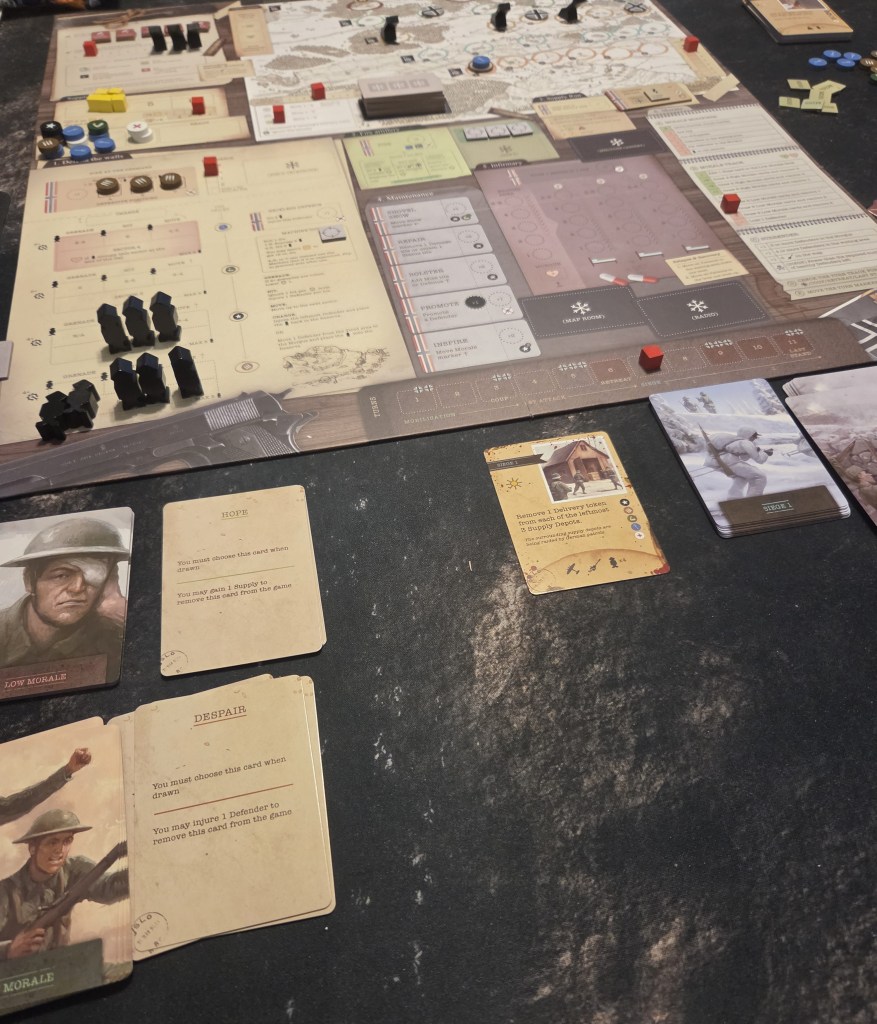
Overall, this game is very fun, and part of that enjoyment comes from the immersive experience it provides. It’s a clever and unique game that creates a fascinating adventure that I appreciated solo but also loved with two players.
The game itself is quite challenging. I think I cheated (some unintentionally and some intentionally) each time I played just so I could appreciate the full game, but if played correctly, this game is tough. I do plan on playing legitimately soon, but I like experiencing the full game, so I let a few things slide here and there.
Replayability is pretty solid. There will always be the same sort of gameplay loop but there is a lot of variability with tiles, cards, missions, etc., and also just the sheer number of choices that can be made early in the game that can influence the whole experience.
There is a luck factor which isn’t always my favorite, but there are quite a few mitigation opportunities throughout the game, and it’s also just the nature of the game, both mechanically and thematically. One other minor qualm: the cubes on the board can be a bit fiddly and can be easily knocked when doing other things, but I also can’t really think of a better way to do it.
I will absolutely admit this isn’t a game for everyone, but if anything here sounds appealing, or if you’ve ever considered it previously, it’s worth a shot. Like I said, it’s very unique, thematic, well-designed, and organized, and it’s one I can see us playing often in the future.


Leave a Reply