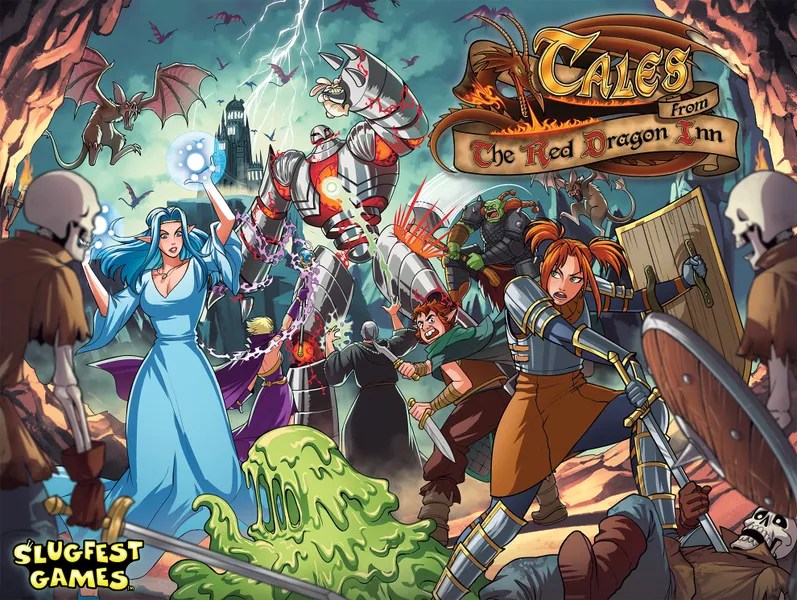
Image taken from https://boardgamegeek.com/image/6388041/tales-from-the-red-dragon-inn
Designers: Geoff Bottone, Jennifer Kitzman, Jeff Morrow, Sam Waller
Publisher: SlugFest Games
This review won’t go super deep into the mechanics and sharper details of the game unless they come up during one of my statements. This is mostly commenting on the design, experience, and why this may or may not be a game for you. I’m always curious how many scenarios games like this have, so I’ll just state now that there are 25 scenarios spread across 5 chapters.
Set up (and repacking after a session): Seriously tedious, especially solo, but not complicated.
Player count: I enjoyed it solo but it’s probably better, both mechanically and story-wise, with other players. More players fighting would be helpful, more cooperative planning, other people to share the experience with, etc.
Rulebook: REALLY good rulebook in my opinion. There’s a start guide that eases you into the first game from setting up to what to do after you finish the scenario. Then the rulebook comes in and it is well organized and informative. There’s also a glossary so you can reference terminology and symbology as you play.
Storage: In desperate need of a storage solution. They do provide a lot of bags which I appreciate, but everything basically gets thrown into the box in bags; there’s nothing else there to help except the “open first” box.
Play time: The actual game time (after set up) for each scenario differs, but I was averaging around an hour per scenario which I found reasonable. Obviously, with more players that would likely increase some.
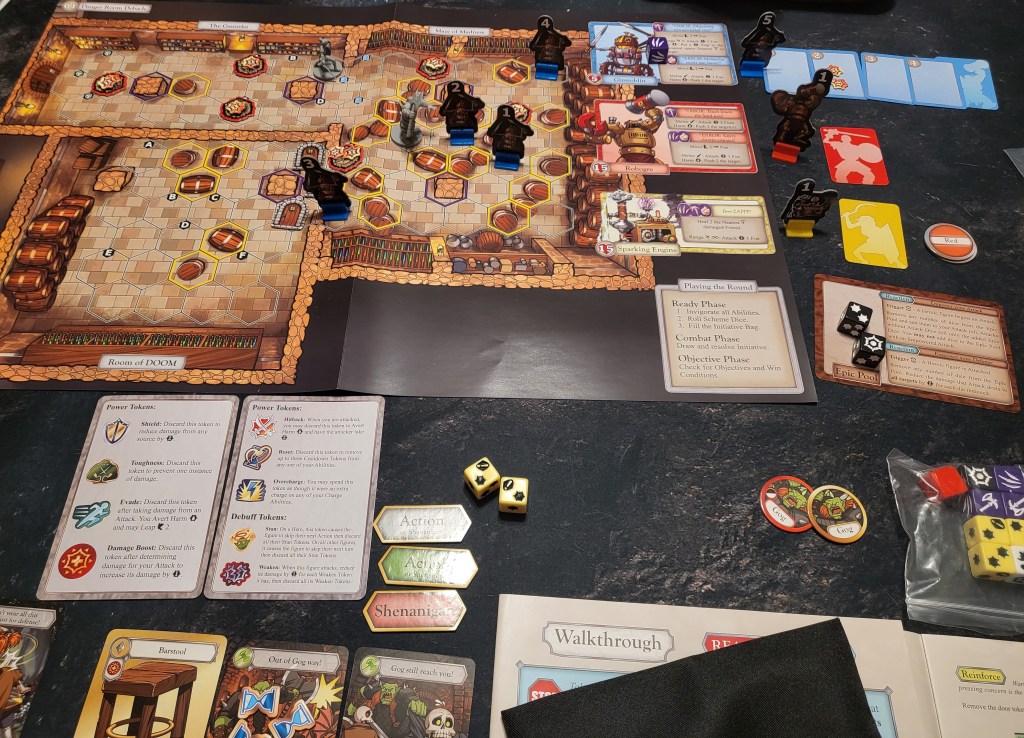
Componentry: Basically what it needs to be. Nothing amazing but also nothing terrible. There are A LOT of tokens, especially once you make it through the whole campaign. The huge maps are actually really well done, I just wish they were easier to de-crease, especially since characters get placed on them. The folder to store them in is greatly appreciated. I also really like that the enemies you face each scenario are printed on the map. Not only does it help with relieving some extra set up and organization, but all necessary information is always going to be visible. Each enemy is also associated with a color, and you place matching colored bases on those specific standees making them easy to differentiate.
Artwork: The artwork is really nice, and all the text on the maps, cards, and player boards is easily readable.
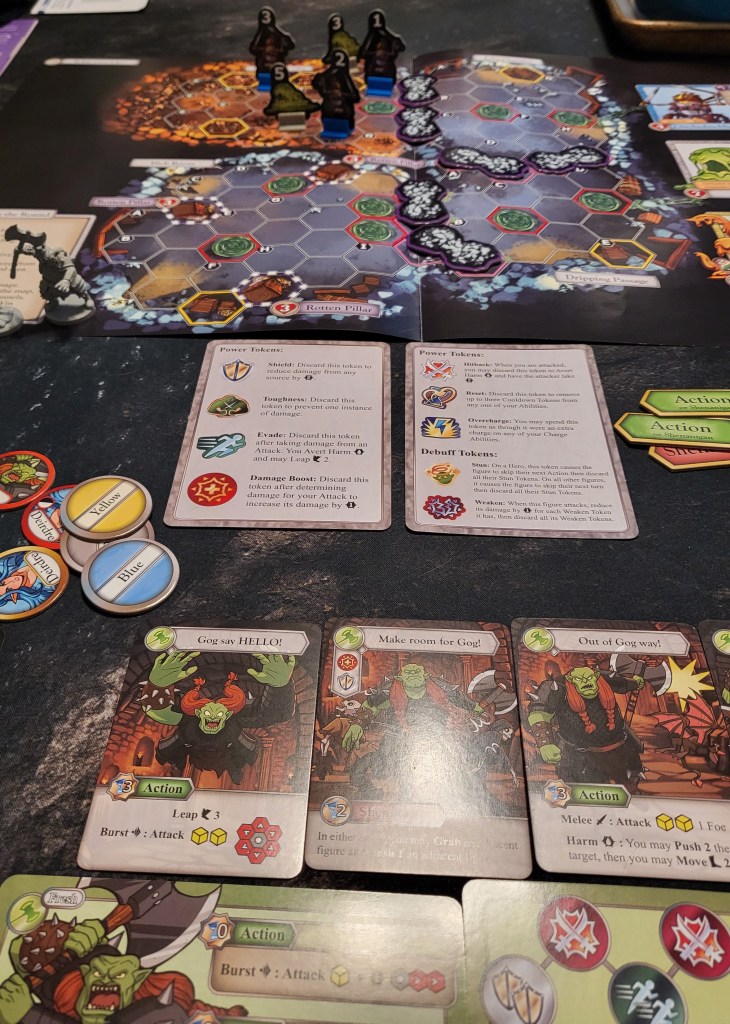
Solo play: I didn’t play “true solo” but with two characters. I experimented with all characters in the first few games but then I found my two favorites and played them for the rest of the campaign. It’s very easy to play solo and/or two handed; there aren’t any additional rules or anything required (except solo when you have a companion).
Degree of complexity: I find this game simplistic in a good way. It’s not challenging mechanically (not saying you don’t have choices, just not a lot of rules and overhead to keep up with) which is actually nice because there’s so much other stuff going on with enemies, characters, maps, items, cards, actions, etc. that having more to keep up with in terms of actual mechanisms and rules could make it overwhelming.
Writing/story: Overall I felt there was a little too much writing in between scenarios. A lot of the stories were rather long winded when they didn’t need to be. The writing itself is really good, though, and quite humorous. This is one of, if not my first, narrative style campaign game, and I will say it was a solid introduction to this genre. I also feel like the story doesn’t “really” matter. Each new section does set up the scenario and provide context, but I often forgot what happened previously in the campaign and just read the new story and played the next scenario.
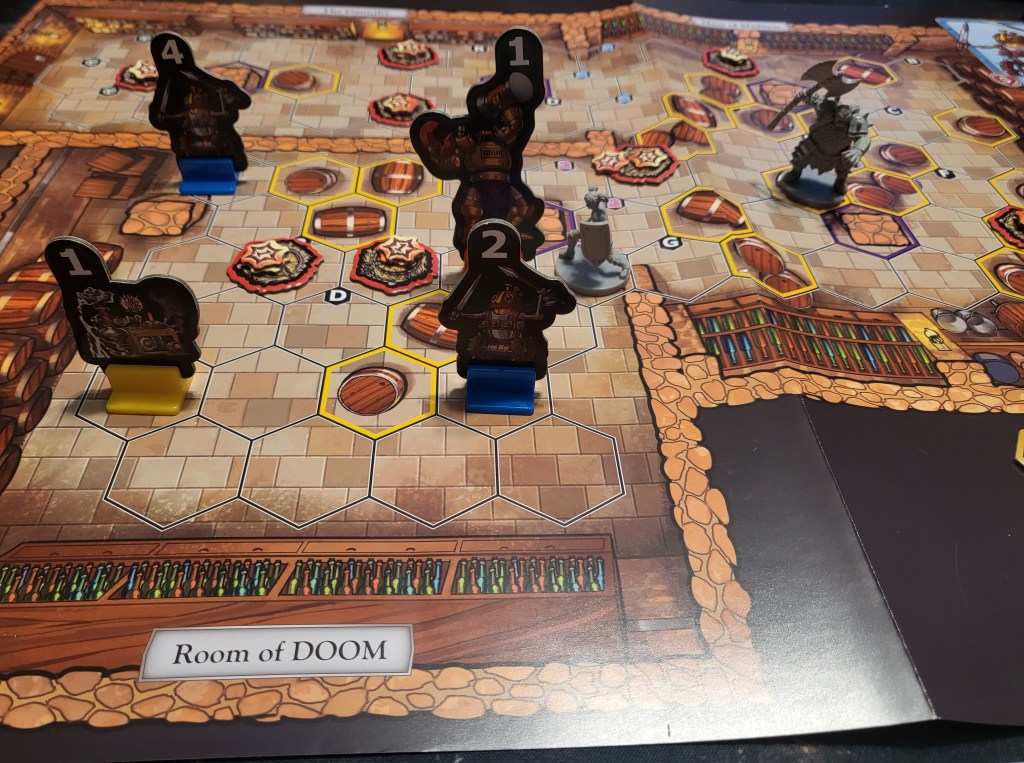
Monsters/enemies: As I mentioned, these are very easy to keep up with during the game which I appreciate. None of them had any super complicated rules or mechanisms or anything. There’s also really good variability in enemies across the campaign which keeps things interesting.
Characters: The characters also have good variety; each feels unique and has specific abilities, actions, and strengths which allow for replayability. I appreciate that their personalities and mechanical designs seem to align. VERY MINOR SPOILER: There are character tech/power trees that show up a little later in the game and I found them rather lackluster. They were good, I understand the inclusion, but they got less and less exciting as the campaign progressed.
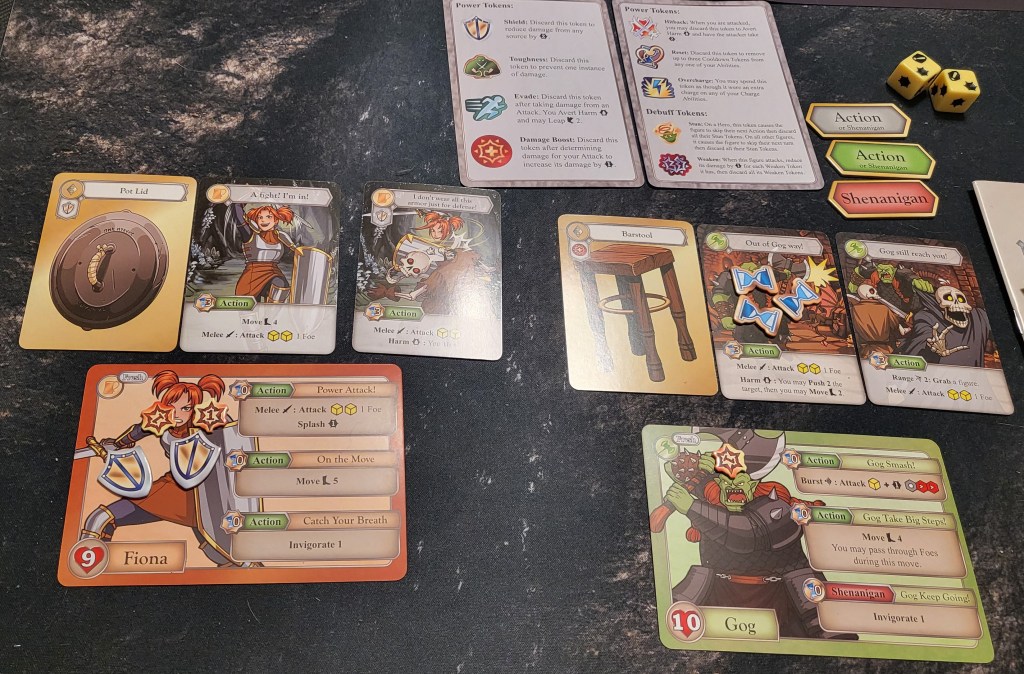
Leveling: Specifically in reference to the characters, I felt the leveling was natural and coincided with the game difficulty pretty well. I enjoyed gaining additional items from the vault between scenarios but some of them were pretty useless and/or lost efficacy since I only had two characters. I was far from using all the available cards and once I found items I liked, I didn’t really stray unless they got upgraded and/or replaced.
Initiative system: Turns in this game are based on drawing tokens out of a bag, each representing a character or enemy currently in play. I thought it was fine; it helped the game flow well and continue at a nice pace but there is also a serious element of luck in it that can get frustrating.
Action selection and cooldown system: This is probably one of my favorite aspects of the game. I love a good action selection game to begin with, but this one is really well designed. Each turn has multiple options, and each action has a specific cooldown time meaning it can’t be used again for X number of turns creating a solid optimization puzzle. I also like that each character has multiple zero cost options so there’s always something players can do on their turns.
Combat: I really like how this is done. It is dice based which isn’t always my favorite (especially in terms of combat and when it’s a boss battler), but you’re always guaranteed some level of success – there is very rarely a complete failure.
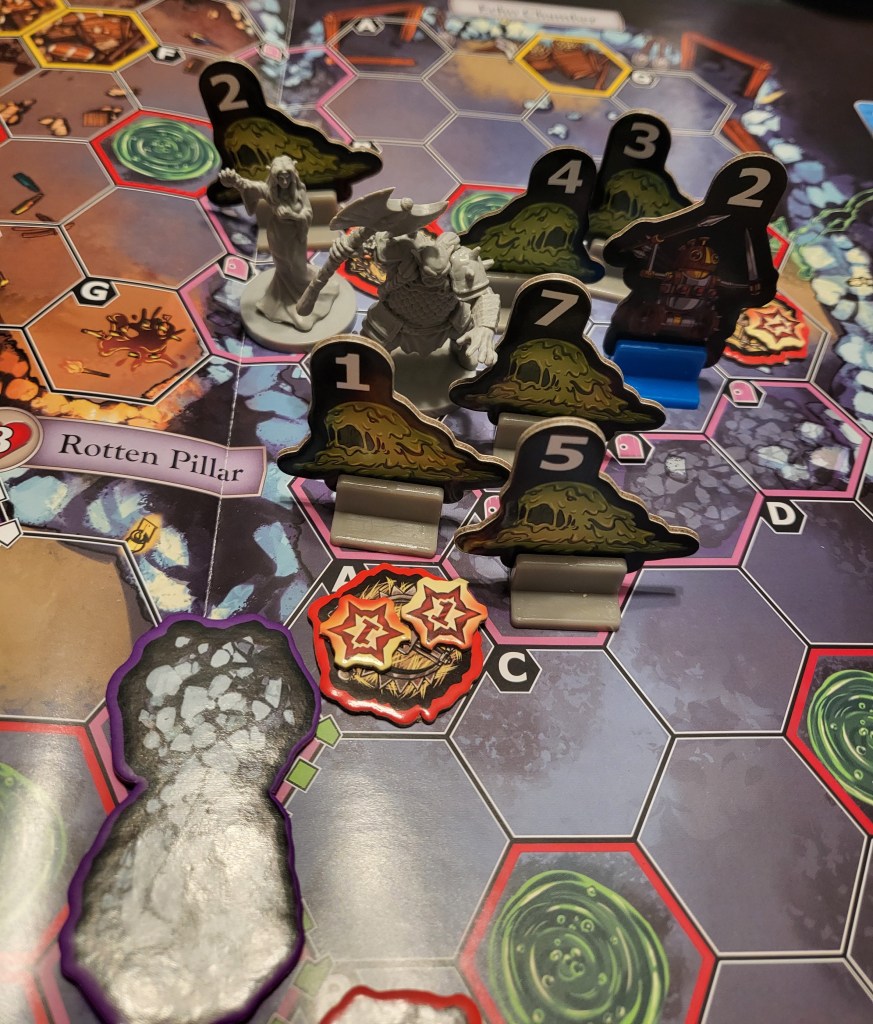
Success rate: Many reviews of this game claim that it’s easy and that success often wasn’t challenging to achieve. It’s very possible I just suck and/or it may be easier with more players, but I did not find this to be true. The earlier ones, sure, but the later ones got quite difficult for me.
Replayability: I need a break from this game, but I do look forward to trying it again in the future, maybe with more players. There are so many scenarios that I think it would be easy to play again, but obviously the story will be less of a surprise unless you manage to forget everything.
Cost: I’m not going to lie, this game is rather expensive. The box is quite large and there is a lot of stuff in it, so the pricing does make some sense. Even though I didn’t love every second of playing this (see next few points), I do feel I got my money’s worth, especially if I play through it again in the future.
Campaign as a whole: The chapters and scenarios are well organized and provide good variety from game to game. Some scenarios are definitely better than others; one was dreadful, a few others were pretty “meh”, but the majority were solid, and there were also some I really found fun and clever. I also got some serious campaign fatigue about halfway through and needed a break, but I think that can be relevant to almost any game you play repeatedly that many times.
Overall experience: In general, this game was fun! I didn’t love every session by any means and there came a time when it was more of a need to play than a want to play so I could finish, but I still enjoyed the time I spent with it. I feel like it’s overall pretty solid – nothing crazy unique or massively original, but it does boss battling very well across a decent storyline and with lots of variability. It was a great introduction to this game style for me, and I look forward to rediscovering it in the future.


Leave a Reply