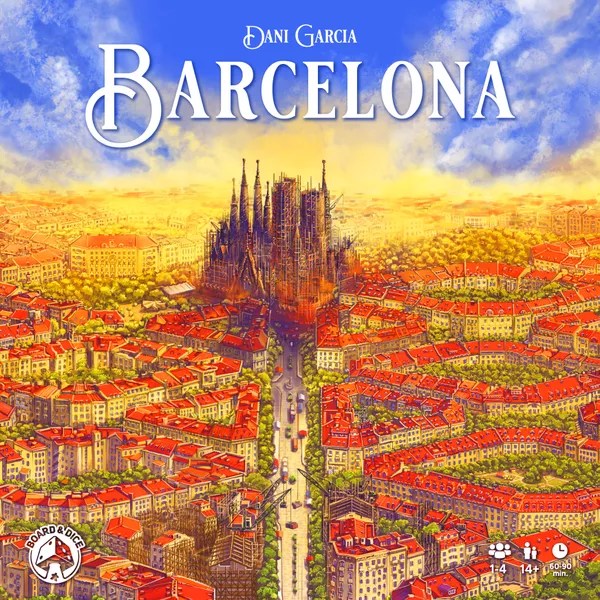
Image taken from https://boardgamegeek.com/image/7442376/barcelona
Designer: Dani Garcia
Publisher: Board&Dice
Artists: Zuzanna Kolakowska, Aleksander Zawada
Many other reviews explain the mechanics and actual design of this game very well, so go check those out if you’re not familiar with how it works; this is just an actual review.
The solo mode in Barcelona is well designed, and I assume it provides a decently similar experience to that of a multiplayer game, but the bot is a little too complicated. The main issue is that the player actually has to decide (with guidelines of course) where the bot places citizens, where certain actions occur on the board, etc., and that can be a lot to handle on top of playing your own game. Like I said, they’re not actual decisions, but you do have to follow cards and rules and additionally make some choices regarding the best location for certain things which isn’t my favorite. I don’t want to help this person, but you’re telling me I have to play to maximize their points? Rude.
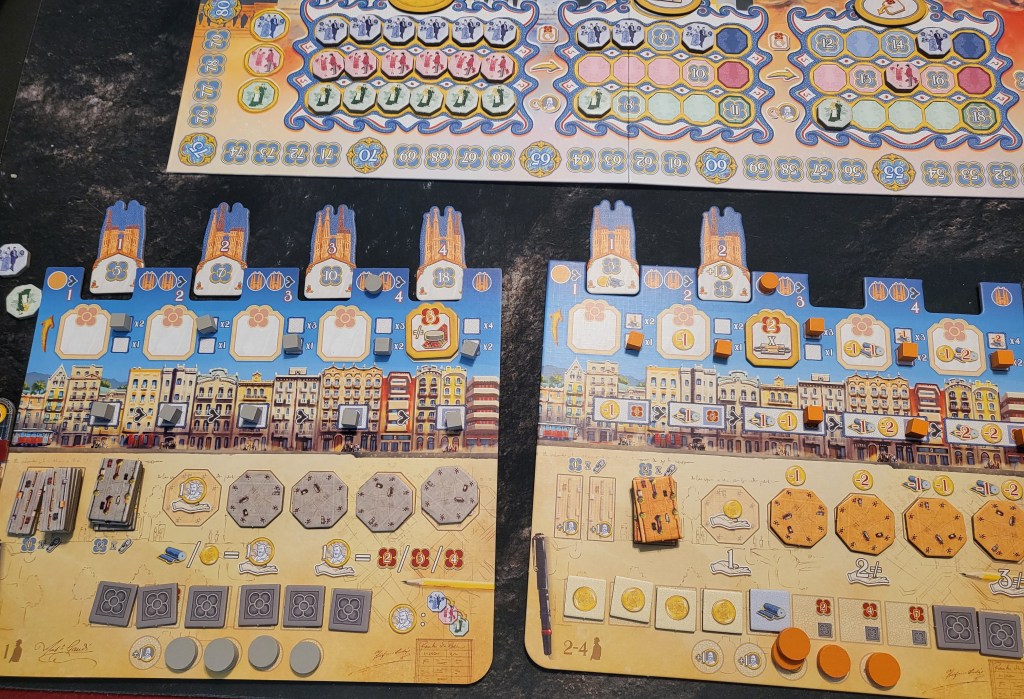
Besides that, though, I really appreciate and enjoy this design. The cleverness behind the interconnected worker placement and action selection is really neat (both physically and mechanically), while also having to consider some resource management along the way. I feel this mix of mechanisms is streamlined, smooth, and overall well represented, which creates a puzzly and challenging but decently straightforward game. It’s difficult, but not impossible, and more importantly, it’s not too complex once you learn the basic ideas and actions.
One particular mechanic/design choice I find particularly intriguing is the citizen tracks being used as a timer in the game. It introduces a small luck factor based on what gets drawn from the bag, but it’s usually not as detrimental because the round end triggers at the same time for all players. Also, since building is mandatory, it’s possible for players to prolong or expedite rounds based on available citizens and how they feel about that round’s scoring condition. Besides that, I also really appreciate that you can randomize the action tiles around the board (or not) to add diversity to each game and significantly increase the replayability.

Thematically, this game falls somewhere in the middle. I love the thematic touches and other information on Barcelona scattered throughout the rulebook, but the game itself can get abstract. Sometimes it just feels like you’re performing actions and building a city, and other times you feel more immersed in the theme and setting. The artwork is also well done, and the game has a lovely table presence. It’s fun to see real-life aerial pictures of Barcelona and see where Dani got his inspiration for the building designs and colorations.
I believe this is my fourth experience with Dani Garcia as a designer and man do I love me some Dani Garcia games. So far, each has been well done, clever and puzzly, but also unique and thematically interesting or different. Let’s see what else he has in store!

 The Adventures of Yogi Bear and Delaware
Leave a comment