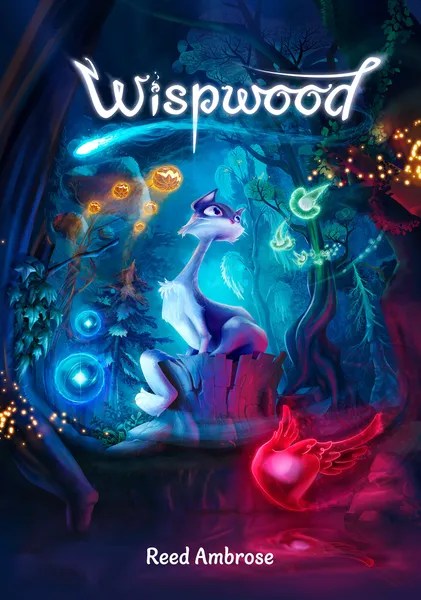
Image taken from https://boardgamegeek.com/image/8857307/wispwood
Designer: Reed Ambrose
Publisher: CGE
Artist: Štěpán Drašťák
Wispwood is a colorful and unique tile laying game that takes place over the course of three rounds. Each round, players build a grid of tiles in front of them by drafting tiles from a main board in hopes of achieving specific scoring conditions for each type of wisp. In the first round, players form a 4×4 grid, the second 5×5, and lastly 6×6. The main twist is that some tiles remain in their exact location in the grid from round to round, so newly placed tiles have to work around them. There are also certain drafting rules and other placement and scoring rules, but nothing too crazy or convoluted.
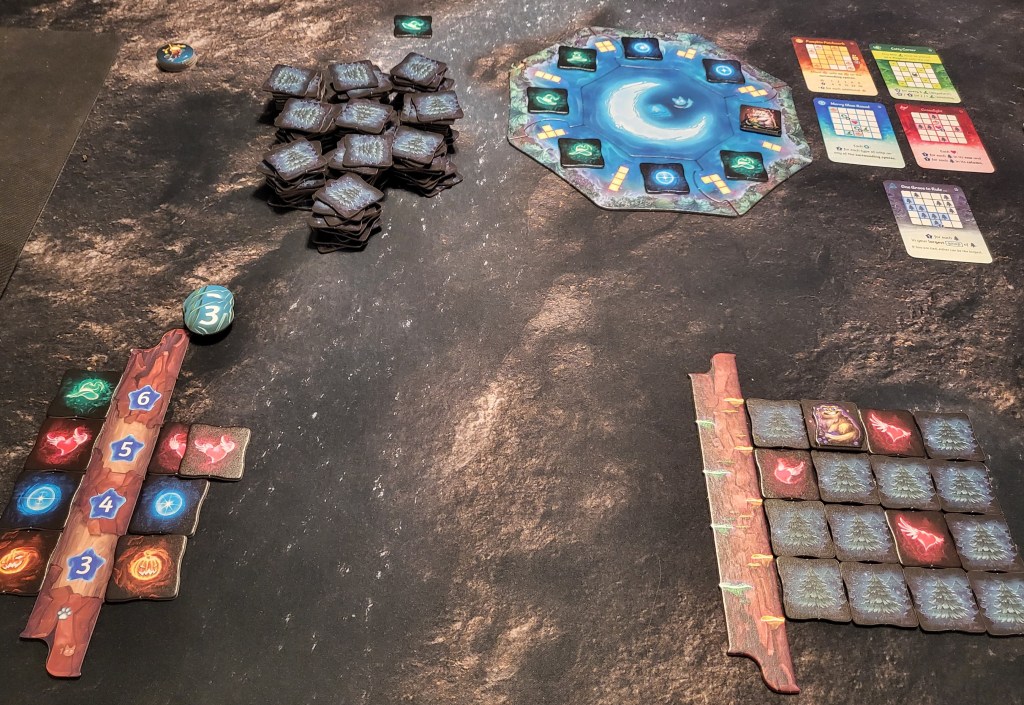
The solo mode is played quite similarly to that of the multiplayer experience, but there’s a form of opponent (called the Ghost) that takes certain tiles from the draft board and places them in a version of a tableau to simulate another player. Its functionality is based on firefly tokens which indicate how many tiles on the main pond (where you draft from) are visible to the Ghost. Then, based on scoring preferences, the Ghost will draft a tile to maximize their point gain. Each of the four wisps are randomized at the start of the game to determine which score X number of points. The Ghost is easy to facilitate, emulates an opponent well, and has four degrees of difficulty which helps with scalability and replayability. For me, the first two levels were pretty easy, but there was a sharp increase in difficulty at level three.
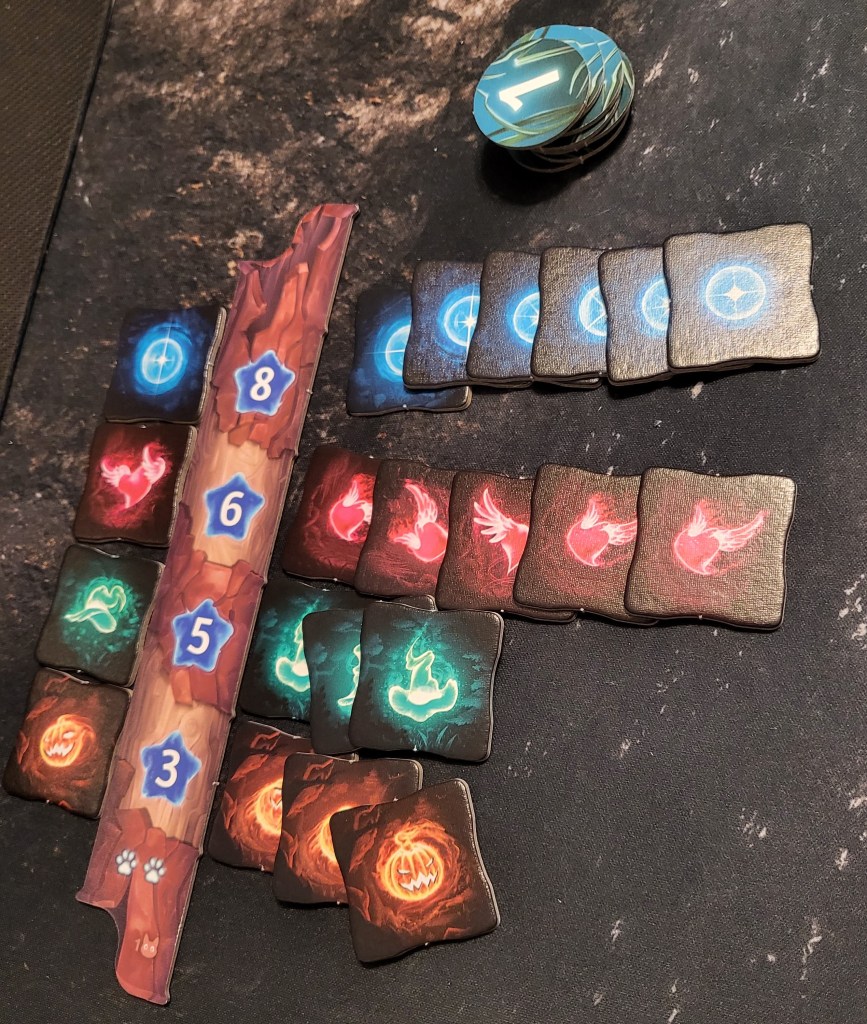
As with most games, I do wish there were solo achievements or scenarios or something because, while each game does have a lot of variety and variability in terms of tiles and, more importantly, scoring conditions, there is little outside of that to make me want to keep coming back to it, especially solo. I do like the different challenge levels, but that’s not quite enough for me.
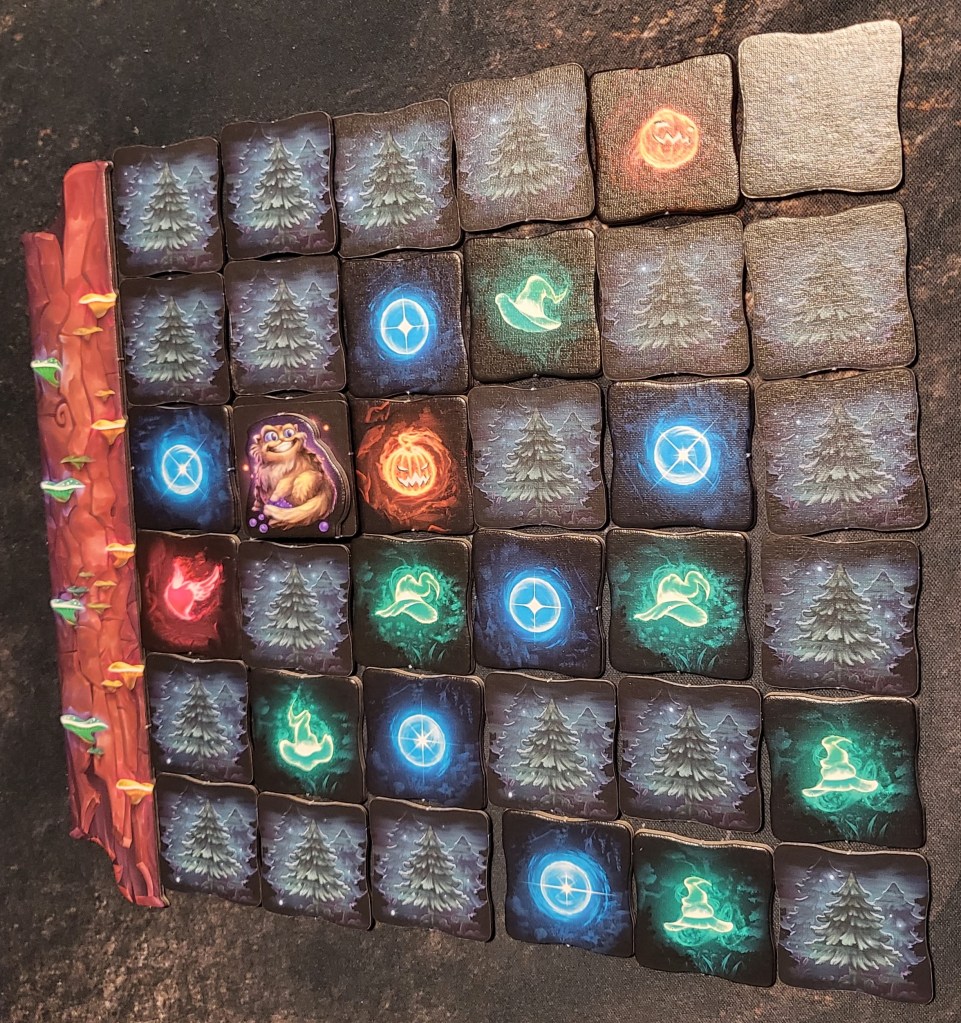
Besides that, there’s really not much to dislike. It’s easy to teach and pretty straightforward but it still has an interesting and well designed puzzle. It plays pretty quickly both in terms of total game time as well as player turn length. The artwork is also really pretty and makes for a lovely table presence. I also greatly appreciate the inclusion of the grid guides to help players form their tableaus each round, especially since they fluctuate depending on round number.
Overall, Wispwood is a great family weight game in terms of rules and complexity while still having enough mechanically to keep more experienced gamers interested. The solo mode is appreciated and incorporated well, but it could use a little extra variety.
 The Adventures of Yogi Bear and Delaware
Leave a comment