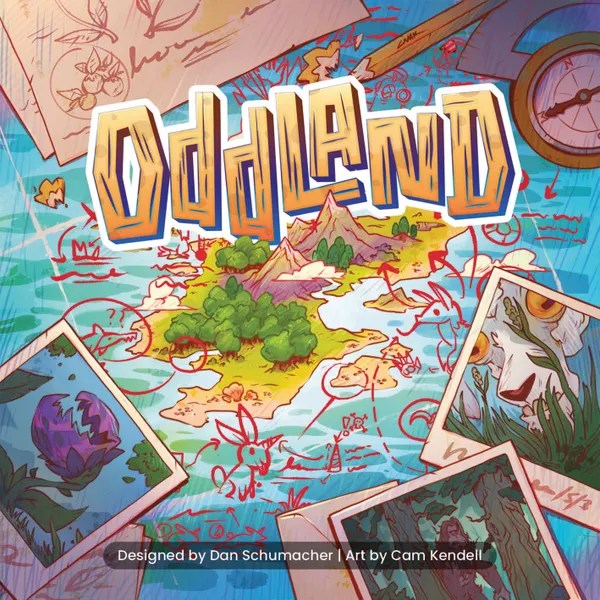
Image taken from https://boardgamegeek.com/image/8430844/oddland
Designer: Dan Schumacher
Publisher: Allplay
Artist: Cam Kendell
Oddland is a quirky little tile laying game where you place map cards out and add different species in habitats to score as many points as possible. Each creature has unique scoring conditions and placement requirements, so not only does the placement of each card matter, but the selection and location of each species is also important.
During each turn of the game, players add a card to the map area on the table and then select an available species and place it on the newly added map card. Each species has unique scoring conditions and placement preferences making their assignment decisions quite important. After ten turns (at least in the solo game), the game ends, and scores are calculated based on the species’ preferences and specific scoring conditions. In the solo game, there are also some point modifications required for certain species (I truly don’t know why these exist and I continually forget about them until the end of the game which is super lame).
That’s a very loose overview, but it covers the basics of the game: play a card, add a species, continue for ten turns, then score. It’s a pretty simple game but there are some interesting decisions including tactical and strategic elements.
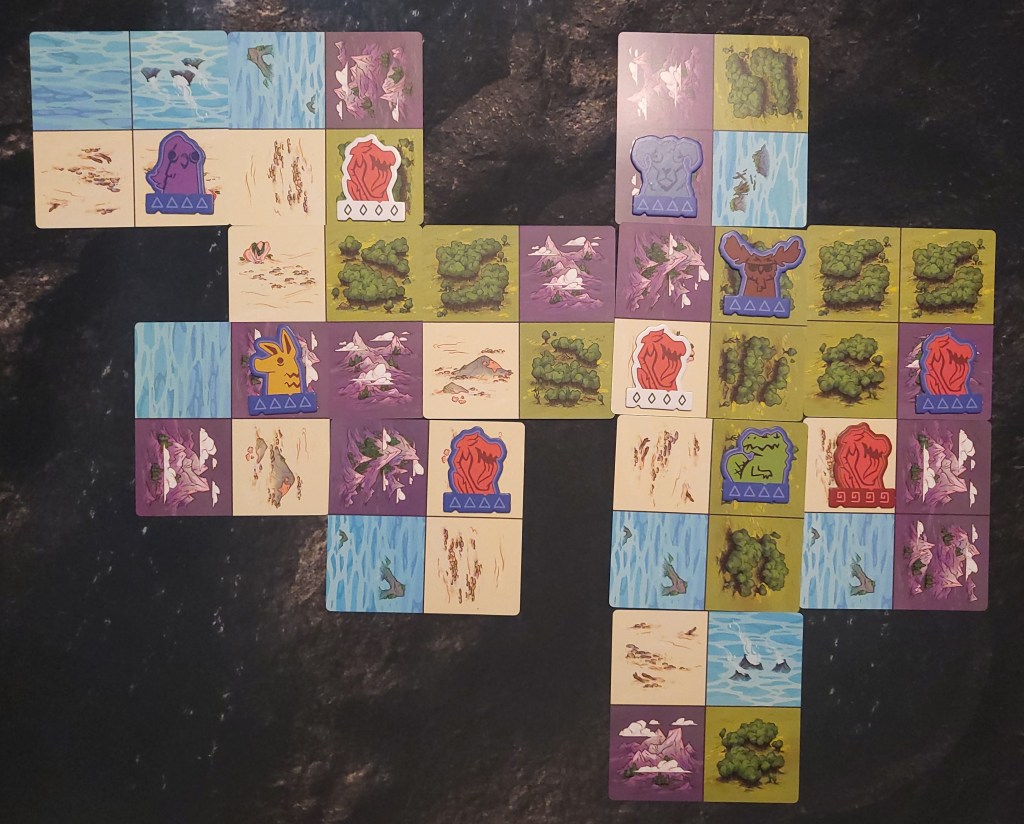
For me, the game is quite odd overall but that’s rather fitting based on the name and theme of the game. The artwork is whimsical and quirky and fun, and the game play, while straightforward, still fits well with the Oddland exuded silliness and creativity.
There are a lot of map cards included which provide good variability, but the replayability seems weak overall. Each of the species’ cards are double sided creating unique experiences, combinations, and varying difficulty levels, but after a few plays with both sides, they’re not as exciting anymore. The game loses that sense of discovery.
I do really like, however, how each species (really each side of the species cards) have specific and unique scoring and placement conditions. Not only do you want to maximize the terrain areas on the board you create, but you also have to consider what each creature wants, which can go on the newly placed card, and how to maximize your points by combining all those elements. The card/tile laying mechanism itself isn’t revolutionary, but the requirement to add a species after each card placement is what sets this one apart. It’s a simple but neat addition to the central mechanic and focus of the game that adds a lot and seems quite original.
The solo implementation is also well done, in my opinion. It’s easy, seems to be quite similar to the multiplayer experience, difficult but not impossible, and plays quickly, so there isn’t much to complain about. Circling back to replayability, though, I wish there were challenges or scenarios or achievements or something included in the rule book to aid in variation and game uniqueness each play. After five or so plays, despite the variety of included species and map cards, I feel like I’ve seen a lot of the game and don’t have a massive desire to continually pull it off the shelf. They could even keep the same creatures and just create more unique conditions; just something else to make me feel like there’s more to the game I haven’t experienced.
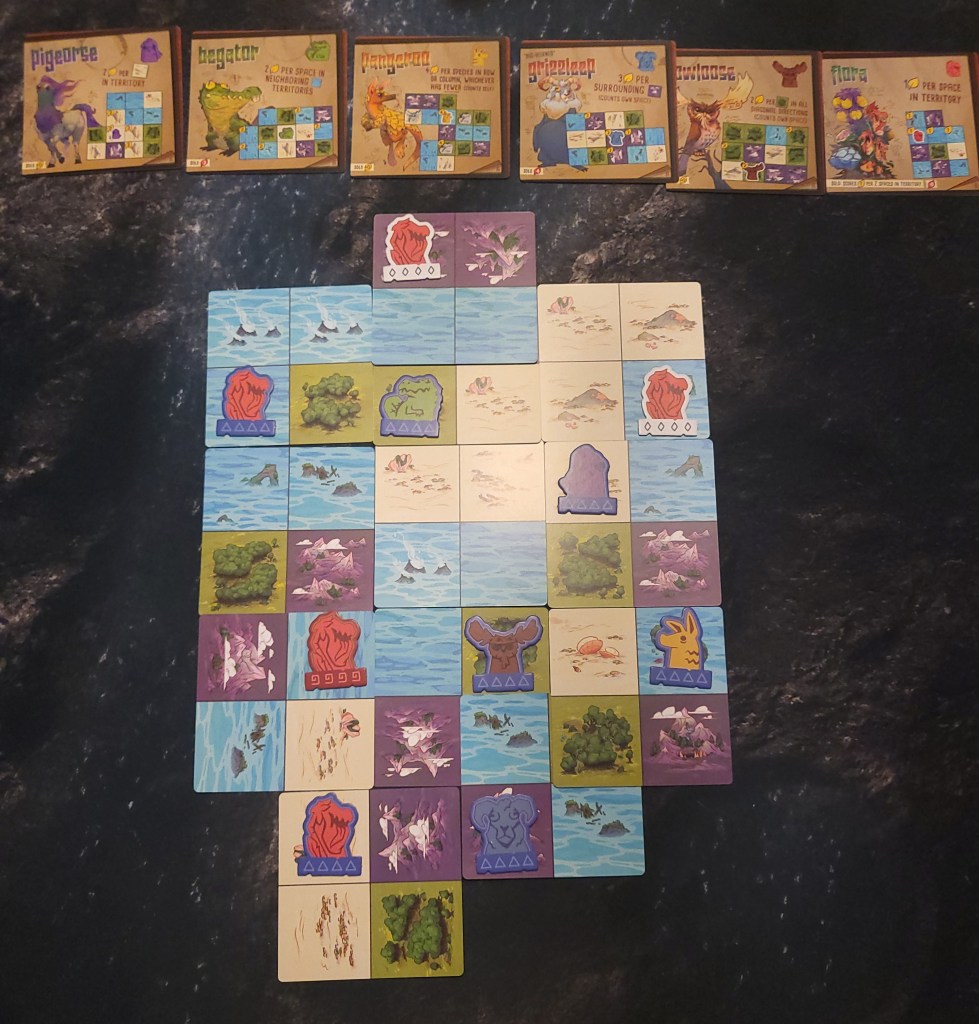
It’s also very possible the multiplayer game is different and creates that feeling of newness. I’d definitely try it multiplayer, but I don’t think I’d want to play with too many people. I could see the game space getting crowded and each player would also have fewer turns making the game less engaging and snappy. That’s all speculation, though; I have no idea how it plays at higher player counts in actuality.
Besides the replayability factor, the other aspect of this game I could foresee being an issue is the luck involved in drawing the map cards, especially towards the end of the game. At the beginning, you have many species available and a multitude of opportunities to create a group of cards that fits as many scoring conditions as possible. Towards the end, however, the creature selection gets more limited, as do the useful placement locations for the map cards, depending on how well you’ve curated the map throughout the game. In theory, you can work towards a specific strategy, but depending on what you draw from the deck, you may have to shift plans and make some tactical optimization decisions. It’s also possible to draw cards that are essentially useless and produce few benefits for you.
Oddland is a decent game that’s quick, fun, and incorporates a nice twist on the standard card/tile laying map building concept. The replayability is my biggest issue, as I enjoy the game, but it started to feel repetitive and less exciting the more I played. But, if you’re looking for a cute game with quirky art, a small box size, and a wide player count, this is one to research.
 The Adventures of Yogi Bear and Delaware
Leave a comment