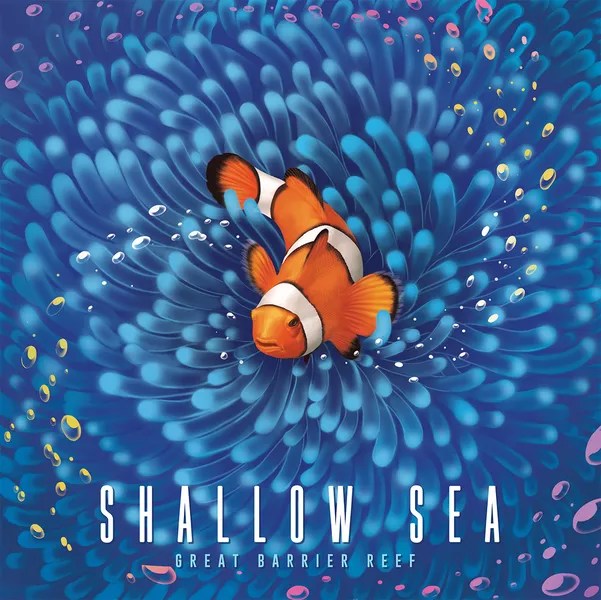
Image taken from https://boardgamegeek.com/image/8418427/shallow-sea
Designer: Yeom.C.W
Publisher: Bad Comet
Artist: Sophia Kang
Shallow Sea is a neat puzzle game that’s reminiscent of Calico (in my opinion). Each turn, players select a tile and fish from the available pools and add them to their personal player board. The goal is to complete the requirements for coral tiles and sea life tiles to score points at the end of the game and also work to gain points from common ecosystem cards. The player with the most points will be the winner!
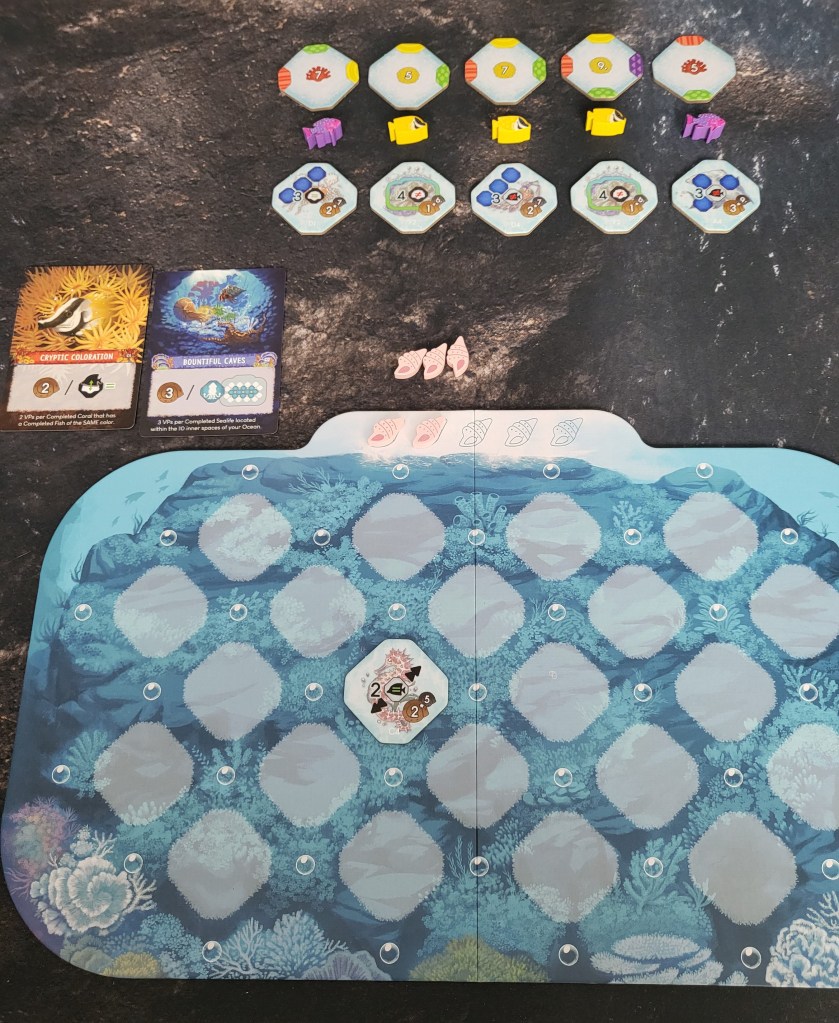
The only actions players take in this game are gaining and playing tiles and fish. At the beginning of the game, pools of coral tiles, fish, and sea life tiles get created – five in each. Each turn, players select one tile and one fish, meaning they either select a coral tile and the corresponding fish, or a sea life tile and the corresponding fish. Once both the tile and fish are selected, they immediately get added to that player’s personal player board.
There are two main decisions to make in this game, plus a third optional one. The first is obviously deciding the tile and fish pairing. The second is where both the tile and fish get placed on your board (note the fish does not have to be placed next to the current tile). The third is if you want to spend seashells on that turn (which we will come back to). That’s honestly basically the whole game. It’s very simple and streamlined but still creates a fun puzzle to solve.
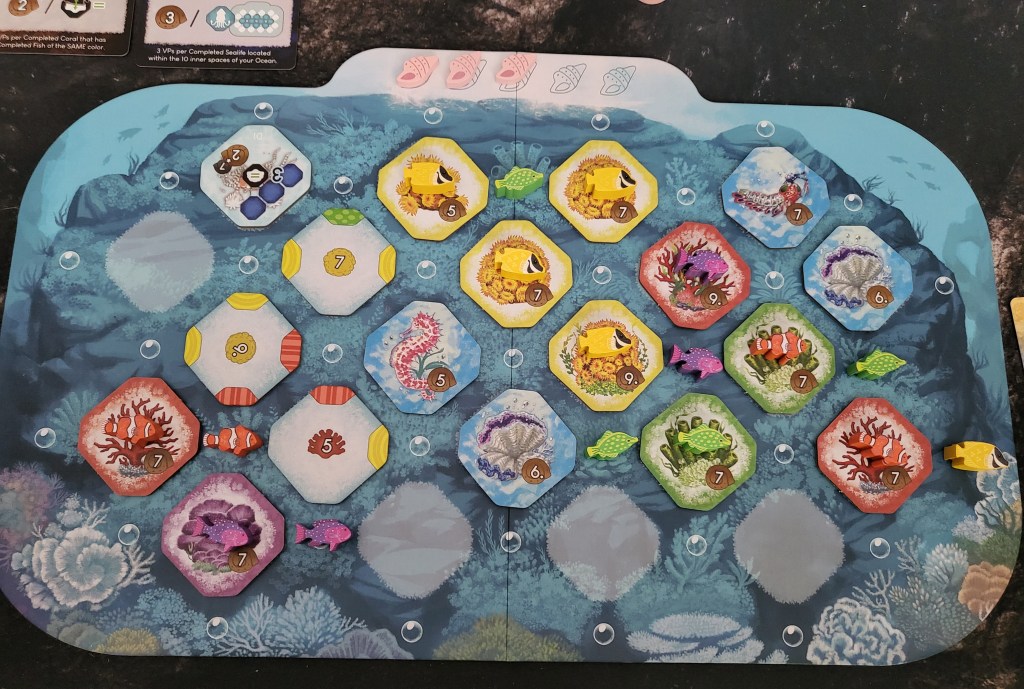
There are a few different ways seashells can be used in the game (for the record, you gain one each time you complete a tile on your board). The first option is to spend one seashell to completely refresh the coral, fish, or sea life tile pool. The second is to spend one seashell to gain any tile and fish combination from the pools. You can still only take one tile but the fish you pick can be any of the five, not the one associated with your selected tile. Lastly, you can spend two seashells at any point to relocate an incomplete fish on your board. For reference, when a coral gets completed by matching the required fish on all sides, it gets flipped over and one of the fish used to complete the tile has to be placed on it, henceforth making that fish a completed fish. An incomplete fish is one that’s on the board and not placed on a tile.
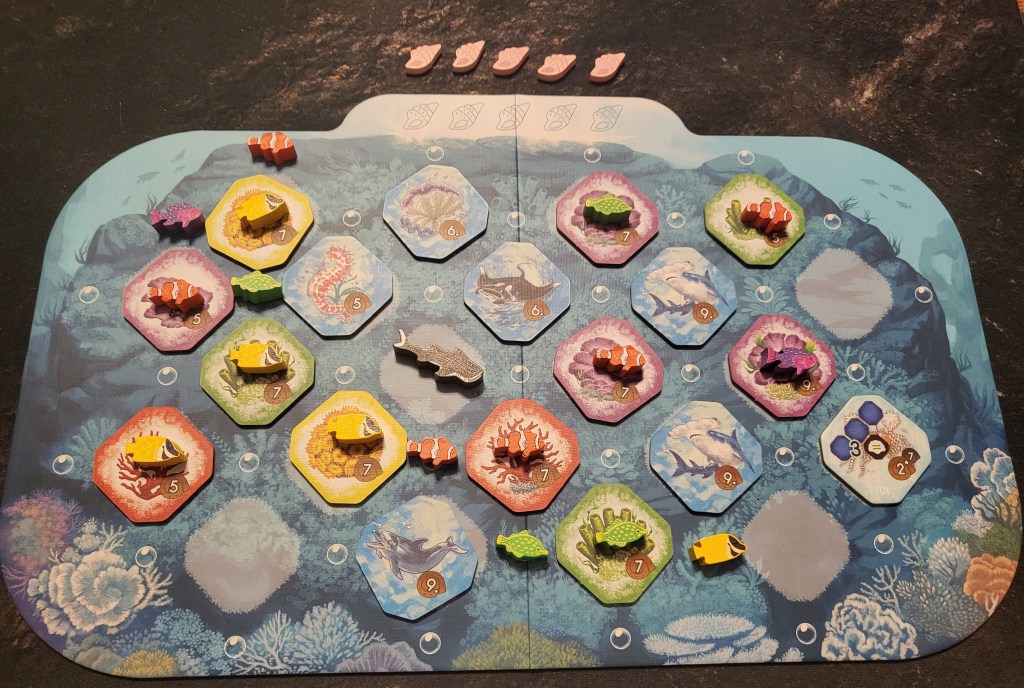
I suppose I never really explained the puzzle here. The coral tiles get completed when certain fish surround the tile (see pics for this to make more sense). Completing corals is important because they provide points at the end of the game and any incomplete corals do not provide any points. The sea life tiles get completed when the specific condition on the tile is met in the appropriate area. For example, some require the same coral to be in three adjacent spots around it, or all different colored fish. The difference with sea life tiles, though, is that no fish are required to be placed on them when completed, and they score a few points even if they aren’t finished by the end of the game.
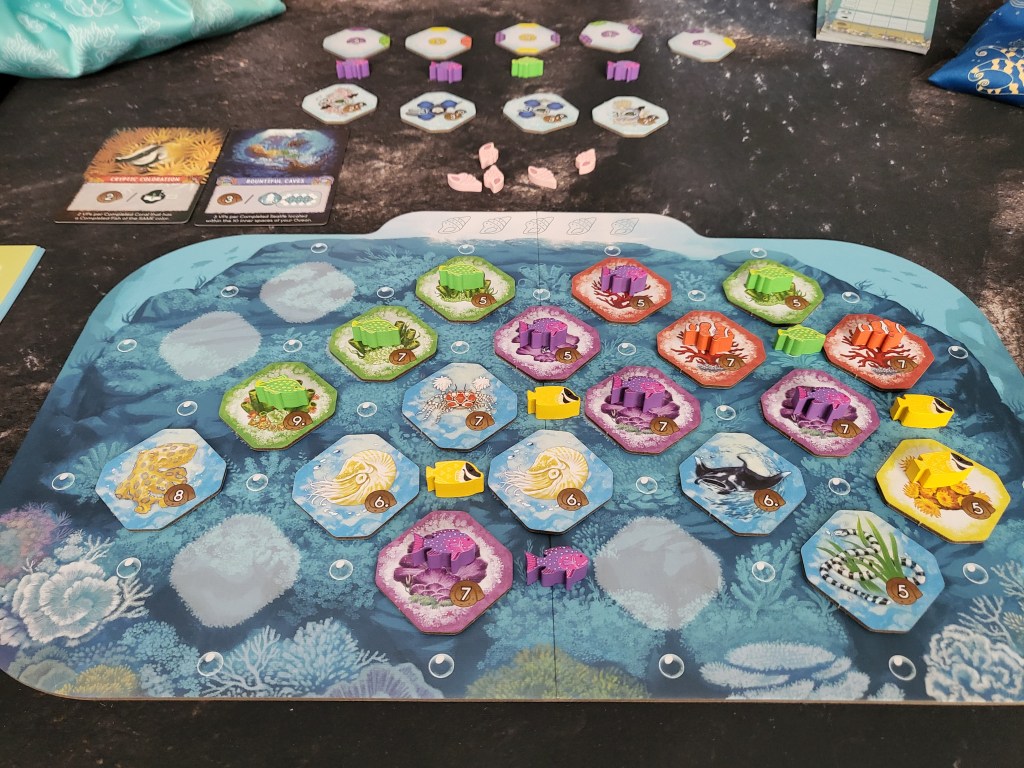
After all players have only four open spots on their board, they score points from completed coral and sea life tiles, incomplete sea life tiles, the ecosystem cards (each has a unique scoring condition), two victory points are granted (each) per differing completed sea life tile (representing the importance of diversity), and each remaining incomplete fish scores one point for each adjacent completed coral.
I have to say the componentry is lovely. Not only are the fish and seashells thick wood, but the cloth bags are nice, and more importantly, the included storage solution for the tiles is AMAZING. If only it was made of something other than plastic! The artwork is also gorgeous! The game also has a very lovely table presence.

The rulebook is well put together. It flows well, describes everything, provides solid examples, and explains the meaning of all sea life tiles, ecosystem cards, etc. There is even some thematic flavor text added in.
Thematically, this game is middle of the road: the puzzle itself is quite abstract as you’re really just matching colors and patterns, but the coral and animal tiles with fish add to the theme some. The seashells are fun and thematic, and most of the ecosystem cards add thematic elements, and parts of the scoring like the points for diversity are also cool and add to the underwater vibe.
The solo mode is very well done! There’s no automa or other player to keep up with, it’s basically a beat-you-own-score puzzle that is really easy to implement and facilitate.
The tile plus fish combination selection concept with the two rows of tiles is a really solid design choice, especially for the nature of the game (pun intended). There are lots of unique tiles, especially in terms of sea life, and the different ecosystem objective cards do make the goal of each game different which creates the need for some specific puzzle solving. The game can also feel tight in terms of time towards the end of the game, which I always enjoy (but it’s not too tight – it’s reasonable). Not only are you trying to complete sea life tiles with ever-shrinking space, but you also have to work towards all the other scoring conditions as well, all the while optimizing your seashell usage and the pools. It can get pretty tight – I like it! The time aspect is honestly probably the best part of the puzzle in my opinion.
One other awesome aspect of this game is the included achievements and scenarios at the back of the rulebook. I always love a game that includes these, and this one provides a lot! There are different objectives, unique achievements, game modifications, and altered play states if you choose a specific scenario. For me, scenarios are always a plus, especially when they can be played solo, but after a few plays, they felt a little samey, unfortunately. There are fifteen scenarios in the base game; I think I played around 5 or 6 and then was done – there isn’t enough variability to warrant that many plays. Each game is different in terms of tiles and cards, but the gameplay itself doesn’t change much, and your choices are all pretty similar. That said, I do enjoy the fact that this game provides some fun flexibility in terms of how you play to score points and accomplish the goals.
One other complaint about this game for me is the luck factor. The seashells can help with this, but it’s possible to get very unlucky with the fish draws (I say this because it happened multiple times, not only once). The tiles don’t seem to be as big of a deal – the times when multiple of them match seem to occur infrequently and are less detrimental.
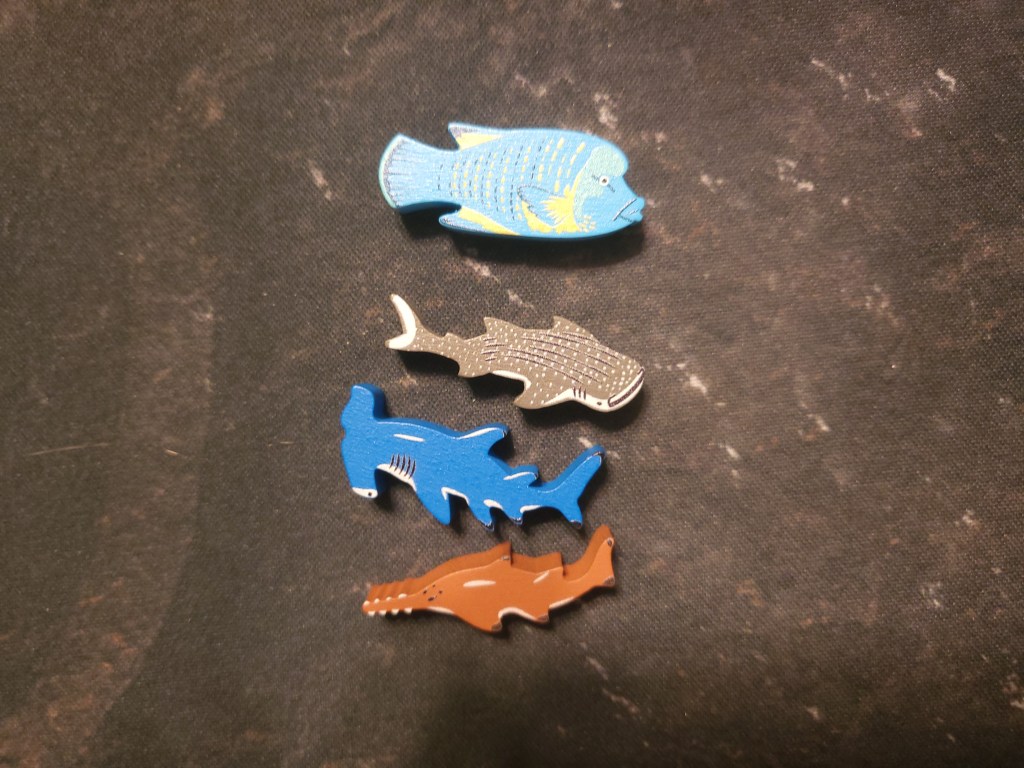
The Rare Fish mini expansion is neat and adds a little variability but there’s still the repetitive gameplay problem in my opinion. Also, it’s very much a mini expansion and doesn’t add much overall to the game.
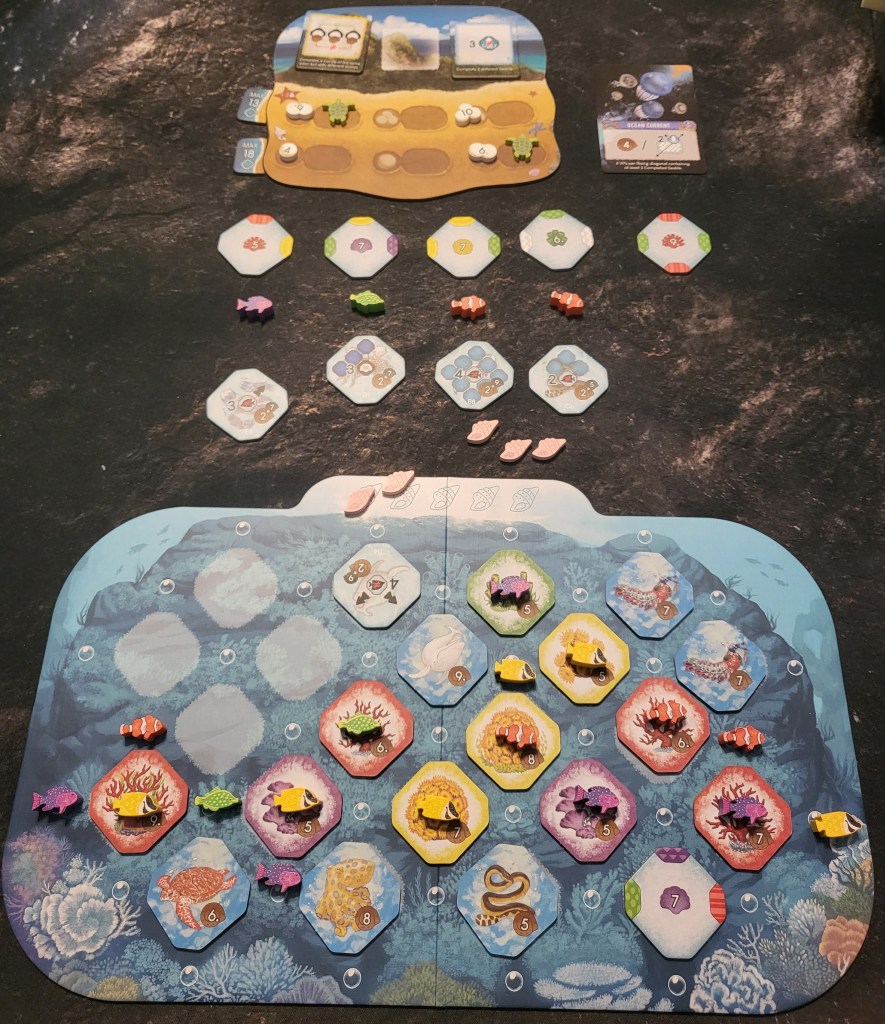
The full Nesting Season expansion, on the other hand, includes a lot of really cool content. Not only does it increase variability in terms of new coral tiles, sea life tiles, and ecosystem cards, but there’s a whole new turtle board that comes into play. Each player gets turtles at the start of the game and turtle tiles get set on the new nesting board. The turtle tiles are basically race objectives – the faster you complete them, the more points you get. This was actually still quite fun in the solo mode (the time constraints are done well since you’re not racing against anyone), but I could see these being even more enjoyable in a multiplayer game. Also, there are ten more scenarios (and other achievements and things) in the expansion that experiment with different combinations of ecosystem cards, sea life tiles, and turtle tiles. The turtles don’t change the game at all, but that race element adds a nice extra layer of strategy and tension.
It’s hard for me to conclude where my feelings have ended up on this one. There is a lot to like: the puzzle is fun and satisfying, the components and artwork are amazing, the scenarios and achievements provide different game motivations and situations, etc., but it’s not something I could play a lot of, especially in a short period of time. While each game is unique, I had this weird plateau effect after the first five or so plays where I got the feeling I was always doing the same thing just with a few changes in colors and patterns. The end goal is always the same; there’s lots of flexibility to explore how to maximize points, but every game still ends with completed tiles and fish and a final score. The expansion does help, in my opinion, with this replayability issue, but it doesn’t completely fix it for me.
 The Adventures of Yogi Bear and Delaware
Leave a comment